PFAS in Kids Lunch Boxes and Food Containers: What Every Parent Needs to Know
A March 2026 study links PFAS in kids' lunch boxes to lower bone density in teens. Learn which products to avoid and find the safest PFAS-free lunch gear for your child.
PFAS in Kids Lunch Boxes and Food Containers: What Every Parent Needs to Know About Bone Health
If you have a kid who eats lunch (so, all of them), this one is worth reading. Recent research has linked PFAS chemicals in kids’ lunch gear to lower bone density during the exact years when strong bones matter most. The good news is that safe, certified options exist, and making the swap is easier than you might think. Let’s dig in.
What’s Inside
- What Are PFAS and Why Are They in Lunch Boxes?
- The Bone Health Connection You Need to Know
- How to Spot a Safe Lunch Container
- Our Top PFAS-Free Picks
What Are PFAS and Why Are They in Lunch Boxes?
PFAS stands for per- and polyfluoroalkyl substances, a family of thousands of synthetic chemicals that have been used since the 1940s to make materials water-resistant, stain-resistant, and grease-resistant. Scientists often call them “forever chemicals” because they don’t break down in the environment or in the human body. They just keep accumulating.
So why are they in a child’s lunch box? Because those same properties that make PFAS so persistent also make them incredibly useful for manufacturers. A lunch bag that sheds water, a sandwich bag that keeps grease from soaking through, a paper food container that resists oil leaks - all of these can involve PFAS-based coatings or treatments.
Here are the main ways PFAS sneak into kids’ lunch gear:
Water-repellent coatings: Many fabric lunch bags are treated with a durable water repellent, or DWR, finish. If water beads up on your child’s lunch bag like it’s rolling off a raincoat, ask the manufacturer directly whether any PFAS-based DWR is used. That beading effect is a clue worth following up on.
Food packaging liners and wraps: Some plastic sandwich bags and food wraps contain PFAS that can migrate into food, especially when the food is hot, fatty, or acidic. Think cheese, leftovers, anything warm from the morning.
Grease-proof paper and fiber containers: Those kraft paper sandwich boxes and fiber-based snack cups that feel so eco-friendly? Many are treated with PFAS to resist grease and moisture. The chemicals can migrate into food depending on temperature, acidity, and how long the food sits inside.
Children face a higher risk than adults because their bodies are still developing and they have a higher exposure relative to their body weight. What might seem like a trace amount for a grown adult hits differently for a 40-pound kid. PFAS show up in everyday baby products like diapers, wipes, and car seats too, so reducing exposure across all categories matters.
The Bone Health Connection You Need to Know
Here is the part that stopped me mid-sip of my morning coffee. A landmark study published in March 2026 in the Journal of the Endocrine Society found a direct link between childhood PFAS exposure and lower bone density in young teenagers.
Dr. Jessie Buckley, one of the researchers behind the study, put it plainly: “After you’re born, you start to accrue bone density, and you do it really rapidly through adolescence. We found that PFAS chemical exposure in children tended to be related to lower bone strength when they’re young teens.”
One chemical kept showing up as the biggest problem: PFOA. According to the study, it didn’t matter when the exposure happened, it was consistently linked to lower bone density, particularly in the forearm. The difference in bone mineral density scores found in the study is similar to what researchers associate with roughly a 10 to 30 percent higher risk of forearm fracture in childhood.
Why does the timing matter so much? Nearly 40 percent of total body bone mineral is acquired during the four years surrounding peak bone growth, which happens around age 12.5 in girls and 14.1 in boys. That window - right in the school lunch years - is when the body is essentially laying the foundation for a lifetime of bone health. Miss that window, and the risk of osteoporosis later in life goes up considerably.
The study also found stronger effects in girls, and that co-exposure to multiple PFAS compounds at once reduced bone mineral density across several bone sites. This isn’t a minor, theoretical risk. It’s a real, measurable effect happening during the years your kid is packing their lunchbox every morning.
Beyond bones, PFAS exposure has also been linked to certain cancers, immune suppression, lower birth weights, and ulcerative colitis. The researchers’ message was clear: “We need to eliminate that exposure to allow our youth to reach their full potential in terms of bone development.”
How to Spot a Safe Lunch Container
Reading product labels for PFAS can feel like a “forever chemical” headache, but a few reliable certifications make it much simpler.
| Certification | What It Covers | What It Means for PFAS |
|---|---|---|
| OEKO-TEX STANDARD 100 | Fabric lunch bags, textiles | Bans intentional PFAS; tests for PFOA, PFOS, and total fluorine |
| BPI Certified Compostable | Paper and fiber food packaging | PFAS-free required since 2020 |
| GOTS (Global Organic Textile Standard) | Organic fabric lunch bags | Restricts harmful chemicals including PFAS |
| PFAS-free or PTFE-free label | Containers and hard goods | Useful, but read carefully (see below) |
One important caveat: a label that says “PFOA-free” only means that one specific chemical is not used. The product can still contain PTFE or other PFAS, so “PFOA-free” alone does not mean it is fully non-toxic. Look for brands that specify “PFAS-free” broadly, or that carry OEKO-TEX STANDARD 100 certification, which tests for PFAS in two different ways and covers the full class of chemicals rather than just one.
When in doubt, stainless steel and glass containers with silicone seals are a reliably safe default. No coatings, no mystery treatments, just materials that have been used in kitchens for generations.
Our Top PFAS-Free Picks
Here are four verified PFAS-free options at different price points, each with a clear reason why it is safe for your child’s daily lunch routine.
- PlanetBox Rover Classic Stainless Steel Bento Lunch Box - Five-compartment 18/8 stainless steel bento with zero plastic interior, zero nonstick coating, and zero PFAS of any kind. Just pure food-safe metal that will last through your child’s entire elementary school career and beyond.

- LunchBots Large Cinco Stainless Steel Lunch Container - A five-section stainless steel bento with a stainless lid, dishwasher safe, and made without any plastic or chemical coatings. A reliable workhorse for parents who want a simple, no-chemicals lunchbox that does not require much thought.

- Bentgo Kids Prints Leak-Proof 5-Compartment Bento-Style Lunch Box - Explicitly labeled PFAS-free and BPA-free by the manufacturer, with five kid-friendly compartments sized for ages 3-7. A good budget-friendly plastic option for parents who want a certified chemical-free product that comes in fun designs.

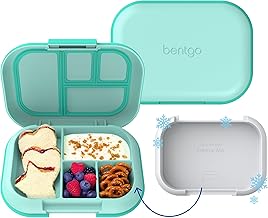
- Bentgo Chill Kids Leak-Proof Lunch Box with Built-In Ice Pack - Certified PFAS-free and BPA-free, this four-compartment box has a built-in ice pack to keep food cold without a separate gel pack, and it is microwave and dishwasher safe. A practical all-in-one for busy school mornings.
If you are also concerned about what goes on your child’s skin, check out our guide to PFAS in baby food packaging, which covers another major exposure route for young children.
You are already doing something powerful just by reading this far. Swapping out lunch gear is one of the most direct ways to reduce your child’s daily PFAS exposure, because it’s a product they interact with five days a week, often for years. Small changes at lunchtime add up to a lot less exposure over the course of a childhood. Head over to the PFAS Free Life database to search verified, PFAS-free lunch boxes and food containers that have already been vetted for you. Because the only thing that should stick around forever is your kid’s strong, healthy bones.